Instructions for Students
This semester, all of our writing will be centered around the research paper. Students will each choose a scientist to research. A portfolio of papers about this scientist and topics related to this scientist will be created by each student. Students may suggest variations on these assignments, but I must approve any changes. The research assignment and the timed writing will be the last assignments completed. Students can choose the order of submission for their creative writing and expository writing assignments.
As you read about the scientist and his/her work, generate lists of research questions that can guide your approach to the scientist. Every rhetorical mode is a response to specific kinds of questions (See Introduction to Rhetorical Modes)  . For instance, in reading Einstein's work on gravity, you might have the question, "How is Einstein's theory of gravity different from Isaac Newton's?" (which suggests comparison/contrast) If you are writing about Rosalind Franklin, you might ask, "How did Franklin's discoveries help James Watson and Francis Crick understand the structure of DNA?" (which suggests cause/effect). In writing about Alexander Graham Bell, you might ask "How does a telephone work?" (which suggests process). Some of the questions you generate may be too complex for developing into an essay. Others might not have enough depth to develop into a full essay. In any case, the questions that you generate will help you understand the material and begin planning your essays.
Deadlines for each assignment will be set throughout the course, but students have the freedom to choose the order in which assignments are submitted with the exceptions of the research paper and the timed assignments which will come at the end of the semester.
Creative Writing
Choose one of the following assignments:
- Poem - Write a poem in any style or form, that touches on this scientist's life, work, and/or influence. (The poem should be a minimum of 14 lines and include the most significant, important, relevant, and valuable information about the scientist's life and work.)
- Narration/Creative Journalism - Write a fictionalized story about an event in the scientist's life or a fictionalized interview of the scientist for the campus newspaper. (The assignment should be approximately 500 words in length, should be well written, with good supporting arguments.)
- Game: Create a game in a Jeopardy style or similar format where the categories and questions are related to aspects of the scientist's life and work. (The game should contain substantial details that highlight significant, important, relevant, and valuable information about the scientist's life and work.)
- Song: Write a ballad that tells the story of the life and work of the scientist, focusing on specific aspects of the scientist's work and perform the song for the class. (The song should be a minimum of 14 lines and include the most significant, important, relevant, and valuable information about the scientist's life and work.)
- Diary: Create a diary for the scientist that follows his or her life and work. Try to write the diary in a voice that feels appropriate to the actual person. (The assignment should be approximately 500 words in length, should be well written, with good supporting arguments.)
- One Act Play: Create a scene or short series of scenes from the scientist's life and work. (The assignment should be approximately 500 words in length including stage directions.)
Expository Writing
Choose any four of the following assignments (Each essay should be approximately 500 words in length, should be well written, with good supporting arguments.):
- Process - Explain a scientific process related to the work of this scientist or explain the Scientific Method using the work of this scientist as illustrative support.
- Definition - Define a key term, concept, or principle relevant to this scientist's work
- Problem/Solution - Write an essay that explains the problem that this scientist was seeking to solve through his/her work and the solutions or results that this scientist discovered as a result of his/her inquiries.
- Comparison/Contrast - Compare this scientist's discoveries, methodologies, or approach to that of another scientist in the same field or compare/contrast two theories related to this scientist's work (c.f., for Hubble, the expanding universe vs. the static universe; for Einstein, classical Newtonian physics vs. relativity; Darwin, creation vs. evolution, etc.).
- Classification/Division - Identify the key characteristics or qualities of this scientist that indicate what type of scientist he/she is (see Types of Scientists on the research assignment).
- Cause/Effect - Write an essay that explains the effects this scientist's work has had on his/her own society and/or on ours, or that discusses this scientist's work in relation to an analysis of the changes taking place in the society of his/her day..
Research
- Research (full instructions) - Write an MLA style research paper that analyzes the life, work, and influence of the specific scientist that you have been studying all semester.
Timed Writing
Do both of the following assignments:
- Persuasive - Write an essay persuading elementary or high school students of the value of scientific research and study as a possible career field. You may narrow your essay to a specific field of scientific inquiry, preferably the field of inquiry in which this scientist was engaged. The essay should be approximately 500 words in length, should be well written, with good supporting arguments.
- Final - Write a personal essay describing how this assignment has helped you to better understand the process of writing and how scientific discovery works. The essay should be approximately 500 words in length, should be well written, with good supporting arguments.
What is the Scientific Method
Topics List
Each student will select one of the follows scientists as the focus of his or her research project. Each student must select a different project from every other student. Topics will be approved on a first come, first served basis.
Agassiz, Louis
Albucasis (Abul Qasim Al-Zahravi)
Al-Khwarizmi (Algorizm)
Anning, Mary
Arrhenius, Svante
Avogadro, Amadeo
Bacon, Francis
Babbage, Charles
Becquerel, Antoine-Henri
Bell, Alexander Graham
Bell-Burnell, Jocelyn
Bessel, Friedrich Wilhelm
Bohr, Niels
Boyle, Robert
Brahe, Tycho
Bruno
Byron, Augusta Ada (Lady Lovelace)
Cannon, Annie Jump
Carson, Rachel Louise
Cavendish, Henry
Copernicus
Coulomb, Charles
Crick, Francis
Curie, Marie
Cuvier, Georges
da Vinci, Leonardo
Dalton, John
Darwin, Erasmus
de Vries, Hugo
Descartes, René
Edison, Thomas Alva
Einstein, Albert
Faraday, Michael
Fermi, Enrico
Fleming, John Ambrose
Franklin, Benjamin
Franklin, Rosalind Elsie
Galileo, Galilei
Geber, Jabir Ibn Haiyan
Geiger, Hans and Walther Müller
Goddard, Robert
Goodall, Jane
Harvey, William
Hawking, Stephen
Heisenberg, Werner Karl
Henry, Joseph
Herschel, William
Hertz, Heinrich
Hodgkin, Dorothy
Hubble, Edwin Powell
Hutton, James
Huygens, Christiaan
Jansky, Karl
Johnson, Katherine
Kepler, Johannes
Lagrange, Joseph-Louis
Laplace, Pierre-Simon, Marquis de
Lavoisier, Antoine-Laurent de
Lowell, Percival
Lussac, Joseph Gay
Lyell, Sir Charles
McClintock, Barbara
Maxwell, James Clerk
Meitner, Lise
Mendel, Gregor
Michaelson, Albert
Mitchell, Maria (astronomy)
Newton, Issac
Oppenheimer, Robert J.
Planck, Max
Platt, Julia Barlow
Poincaré, Jules Henri
Priestley, Joseph
Richardson, Owen Williams
Roentgen, Wilhelm
Rutherford, Ernest
Schmidt, Maarten
Schrödinger, Erwin
Shapley, Harlow
Swallow-Richards, Ellen Henrietta
Szilard, Leo
Tesla, Nikola
Thomson, J. J.
Tsiolkovsky, Konstantin E.
Villepreux-Power, Jeanne
von Braun, Werner
Watt, James Wu, Chien-Shiung
Library Resources
Library Research Pathfinder
History of Science Research ProjectPrepared by Steve S. Pec, Reference Librarian, Chattanooga State
Spring 1996
This History of Science Research Project focuses on three types of questions: biographical, scientific projects, and significance. The questions proceed from simple factual data to complex evaluation of the scientist's contribution. The following list of selected sources reflects the above pattern of progression.
Biographical information given, the amount varies from several lines to several paragraphs. The latter, often, include bibliographies of additional reading.
American Men of Science. Ref Q141 .A47 6v
American Men and Women of Science. Ref Ql4l .A474 8v
Asimov's Biographical Encyclopedia of Science. Ref Ql4l .A74
American Women in Science. Ref Q141 .B25
Biographical Dictionary of Scientists. Ref Q141 .B528
Biographical Dictionary of Scientists. Ref Q141 .B45 4v
Blacks in Science and Medicine. Ref Q141 .B58
Current Biography. Ref CT100 .C8 v1--
Dictionary of American Biography. Ref E176 .D563 11v
Dictionary of National Biography. Ref. DA28 .D4 22v
Dictionary of Scientific Biography. Ref Q141 .D5 16v
Lifelines Famous Contemporaries from 600 BC to 1975. Ref CT104 .W45
McGraw-Hill Encyclopedia of World Biography. Ref CT103 .M27 12v
Webster's Biographical Dictionary. Ref CT103 .W4
Who's Who. Ref DA28 .W6 v1--
Who's Who in Frontier Science and Technology. Ref Q141 .W57
Women in Science. Ref Ql4l .D34
World Who's Who in Science. Ref Q141 .W7
Along with biographical information, often, project description and/or its significance are described. Sources for further study are also identified.
Great Engineers and Pioneers in Technology. Ref TA139 .G7
McGraw-Hill Modern Man of Science. Ref Q141 .M15 2v
McGraw-Hill Modern Scientists and Engineers. Ref Q141 .M15 3v
Notable Twentieth Century Scientists. Ref Q141 .N73 4v
Nobel Prize Winners. Chemistry. Ref QD35 .N64 3v
Nobel Prize Winners. Physics. Ref QC25 .N63
Nobel Prize Winners. Physiology or Medicine. Ref R134 .N633 3v
Project description and/or its outcome and significance are discussed. Sources for further study are also identified.
Album of Science. Ref Q125.6 .A42 5v
Asimov's New Guide to Science. Ref Q162 .A8
Dictionary of the History of Science. Ref Q125 .D45
Great Events from History. Science and Technology. Ref Q125 .G825 5v
Inventions and Discoveries. Ref Q180.55 .D57 L58
Magill's Survey of Science.
Applied Science Series. Ref TA145 .M298 6v
Earth Science Series. Ref QE28 .M33 5v
Life Science Series. Ref QH307.2 .M34 6v
Physical Science Series. Ref Q158.5 .M34 6v
Milestones in Science and Technology. Ref. Q199 .M68
Science and Technology Desk Reference. Ref Q173.5397
World of Scientific Discovery. Ref Q126 .W67
Explanations of key terms, principles, or processes are offered.
Encyclopedia of Physical Science and Technology. Ref Q123 .E497 15v
Langman Illustrated Science Dictionary. Ref Q123 .G6
McGraw-Hill Dictionary of Scientific and Technical Terms. Ref Q123 .M34
McGraw-Hill Encyclopedia of Science and Technology. Ref Q121 .M3 20v
Van Nostrand's Scientific Encyclopedia. Ref Q121 .V3 2v
To find additional sources, many not listed here, use indexes or electronic databases. Indexes list citations to biographical material in books and magazines.
Biographical Index to American Science. Ref Q141 .E373
Biography and Genealogy Master Index. Ref Z5305 .U5 B57 8v
Biography Index. Ref Z5301 .B5 16v
Electronic databases list citations to books and magazines. In addition, some may offer abstracts.
Bibliofile. Intelligent Catalog - books
ERIC - articles and reports
Wilson. Applied Science and Technology - articles
Faculty and Librarian Collaboration
By analyzing assignments in collaboration with librarians, instructors can design assignments that guide students through research so that librarians can develop materials that present both library and Internet resources in interesting and attention-getting formats using handouts, Web pages, and HTML documents.
Critical thinking, writing process, writing across the curriculum, collaboration: these are the buzz words of the '90s. Seminars held to discuss the philosophical bases for these pedagogical approaches become pep rallies where instructors are impressed with the vision for a revised pedagogy and the importance these skills hold for students and teachers.
But how do we, as educators, put these pedagogies into practice in the classroom, make them part of actual assignments, assignments like the research project?
Most classes in the humanities require students to do some type of research assignment. Students are instructed to select topics from an approved list or the textbook. Frequently instructors avoid giving students directions which are too specific because the instructor focuses part of the evaluation on the quality and nature of students' explorations into research.
Depending on their level of sophistication, however, students may only see research as a documented report. Students may lack the sophistication to understand or incorporate information-seeking skills like formulating and defining questions, qualifying research, or evaluating source materials.
To help students do effective research, instructors must analyze the research task they are asking students to perform, identify the steps involved in that process, access the kinds of thinking students must perform to be successful, and in collaboration with the librarian, design a general approach to the assignment and identify appropriate resources in formats which take advantage of expanding library and Internet resources.
Developing a Collaborative Research Assignment
Developed by Steve Pec
Determining a purpose (instructor): Why is the instructor assigning this project?
To help students effectively complete a research assignment, the instructor must consider what he or she hopes to gain from having students do the assignment. The instructor should be able to formulate some preliminary answers to these questions:
- What should students learn from doing this research paper that will enhance their understanding of this class?
- How will their work on this assignment affect how they think?
- What long term learning or understanding will result from completing this assignment?
- What is the level of sophistication for this assignment? (introduction to the research process, introduction to a field, global survey, problem analysis, detailed analysis/description of a single aspect, etc.)
Surveying materials (instructor/librarian): What library resources are available to students?
Most instructors assign projects within their field of study (c.f., a history teacher teaching U.S. History would have a general knowledge of the field). However, if the instructor is assigning a topic for research outside his or her field (as may be the case with a composition instructor), the instructor may need to do some background reading and study to get a feeling for the subject. Instructors should also meet with the librarians to determine the quality and types of materials available to students.
Identifying information (student/instructor): What information questions should students consider?
Sometimes faculty have a fear of giving students too much information. However, students need some guidance. Depending on the level of the students, the purpose of the assignment, and time constraints, the following questions could be answered by the instructor and distributed to the students, or students and instructor could explore them in class:
- What is the reason or purpose for exploring this topic? (Generally the answer to this question will relate to significance or relevance as it pertains to the course)
- What questions about the topic will students need to ask in order to complete this assignment?
- What data will students need to gather to complete this assignment?
Developing focus (student/instructor): What purpose questions should students consider?
The scientist Louis Agassiz once said that "facts are stupid things until brought into connection with some general law." One frequent problem with research papers is that they are little more than book reports. Students simply parrot back information which they have read instead of coming to grips with their subject and trying to fit the data they have researched into some scheme. The following questions explore the global nature of the research paper. Again, the answers to some of these questions could be supplied to students, or the questions could be explored in class. Some questions may be more applicable to certain research questions than to others.
- How does this assignment relate to the overall aims of the class?
- What mode of inquiry are students to take toward their topic? (i.e., analysis, synthesis, exposition, interpretation, persuasion, etc.)
- What relationships, patterns, or internal structures should students consider when exploring this topic?
- What is central to understanding this topic?
- What point of view seems appropriate for discussing this topic?
- What implications can be drawn about this topic that indicate further study or that suggest a course of action?
Previewing resources (instructor/student): What format questions should students consider?
Depending on the level of the class, students may or may not have experience doing research. Prior to visiting the library or scheduling a library orientation, an instructor needs to consider what students need to know about the format of research.
- What experiences have students had doing research?
- What style manual will students be using for their paper?
- What level of source materials are students expected to use: primary, secondary, tertiary?
- What format of resources are students expected to use: magazines, books, reference, reprint services, CDROM databases, Internet resources?
- What information about their sources should students record?
- How many sources are students expected to include?
- What special instructions about format does the instructor have? Typing conventions? Layout? Type of outline?
Evaluating resources (student/instructor): What resource questions should students consider?
Particularly with regard to Internet sources, students must think about the quality of their sources. Again, depending on the level of the class and the purpose of the assignment, students may not have much experience in evaluating resources.
- Are some resources better than others? How can a student tell?
- What should a student do when sources disagree?
- On what information is the source based? Firsthand accounts? Interviews? Personal or Scholarly Research? Other reports?
- How detailed or specific is each source?
- What is the background or point of view of the author of the source?
- What is the background or point of view of the publisher of the source?
- What assumptions about the topic does the author of the source make?
- Who is the intended audience of the source?
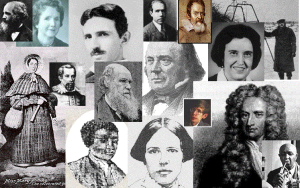 One criticism frequently lodged against the educational system is that schools turn out students who have little interest in or knowledge of math and science. The purpose of this paper is to enhance students' understanding of what it is that a scientist does and to expose them to some of the men and women of science who have been influential in advancing scientific research and understanding and, in consequence, have helped to shape our modern world. By studying the work of the scientists within the context of their lives and the personal experiences and motivations that led them into their scientific endeavors, students gained a better understanding of what science is and why it matters.