Definitions of Science Fiction
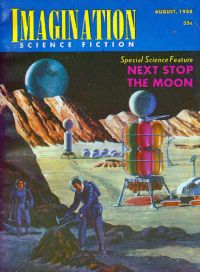 "Science fiction deals with scientists working at science in the future" (Asimov 21).
"Science fiction stories are extraordinary voyages into any of the infinite supply of conceivable futures" (Asimov 23).
"Science fiction can be defined as that branch of literature which deals with the reaction of human beings to changes in science and technology" (Asimov 76).
"Scientific methodology involves the proposition that a well-constructed theory will not only explain away known phenomena, but will also predict new and still undiscovered phenomena. Science fiction tries to do much the same--and write up, in story form, what the results look like when applied not only to machines, but to human society as well." --John W. Campbell, Jr ("Definitions")
"SF is . . . a literary genre whose necessary and sufficient conditions are the presence and interaction of estrangement and cognition, and whose main formal device is an imaginative framework alternative to the author's empirical environment" (italics in original) (Suvin 8-9)
Science fiction is "a fictional tale determined by the hegemonic literary device of a locus and/or dramatis personae that (1) are radically or at least significantly different from the empirical times, places, and characters of the "mimetic" or "naturalist" fiction, but (2) are nonetheless--to the extent that SF differs from other "fantastic" genres, that is, ensembles of fictional tales without empirical validation--simultaneously perceived as not impossible within the cognitive (cosmological and anthropological) norms of the author's epoch. Basically, SF is a developed oxymoron, a realistic irreality, with humanized nonhumans, this-worldly Other Worlds, and so forth." (Suvin viii)
Science fiction is "Fiction dealing principally with the impact of actual or imagined science upon society or individuals, or more generally, literary fantasy including a scientific factor as an essential orienting component. Such literature may consist of a careful and informed extrapolation of scientific facts and principles, or it may range into farfetched areas flatly contradictory of such facts and principles. In either case, plausibility based on science is a requisite" ("Science Fiction," Merriam-Webster's)
"SF is a form of fantastic literature that attempts to portray, in rational and realistic terms, future times and environments that are different from our own. It will nevertheless show an awareness of the concerns of the times in which it is written and provide implicit commentary on contemporary society, exploring the effects, material and psychological, that any new technologies may have upon it. Any further changes that take place in this society, as well as any extrapolated future events or occurrences, will have their basis in measured and considered theory, scientific or otherwise. SF authors will use their strange and imaginative environments as a testing ground for new ideas, considering in full the implications of any notion they propose." (Mann 6)
Works Cited
Asimov, Isaac. Asimov on Science Fiction. Doubleday, 1981.
"Definitions of SF." The Encyclopedia of Science Fiction. 26 May 2025. 2 May 2026. <https://sf-encyclopedia.com/entry/definitions_of_sf>.
Mann, George, ed. The Mammoth Encyclopedia of Science Fiction. New York: Carroll and Graf, 2001.
"Science Fiction." Merriam-Webster's Encyclopedia of Literature, 1995. Literature Resource Center. Gale Group. 21 Aug. 2001. Accessed: http://www.galenet.com/servlet/LitRC.
Suvin, Darko. Metamorphoses of Science Fiction: On the Poetics and History of a Literary Genre. Yale UP, 1980.
SFF News, Reviews, and Articles
Articles on Science Fiction and Fantasy
- Beukes, Lauren, et al. Science fiction When the Future is Now

- The Conversation. Science fiction builds mental resiliency in young readers
- Cunningham, Vinson, Naomi Fry, and Alexandra Schwartz. Is Science Fiction the New Realism?
- Dahms, Harry F. Studying science fiction films can help students understand the power societies have to shape our lives
- Engdahl, Sylvia. The Mythic Role of Space Fiction
- ---. Not All Stories About the Future Should Be Called Science Fiction
- Galchen, Rivka. Thinking About A.I. with Stanislaw Lem
- Grebowicz, Margret. Terry Bisson's History of the Future
- Harari, Yuval Noah. Why Science Fiction Is the Most Important Genre
- Howard, Alexander. The Dispossessed at 50: Ursula K. Le Guin's 'anarchist utopia' was an anguished response to war. Its political power endures
- John Hopkins Krieger School of Arts and Sciences World Fiction Course. Reviews, Articles, & Essays
- Khaliq, Namir. Does Science Fiction Shape the Future?
- Lindell, Yosef. Isaac Asimov's Throwback Vision of the Future
- Marozzo, Veronica, et al. The impact of watching science fiction on the creativity of individuals: The role of STEM background
- Quintanilla, Carlo G. How science fiction helped me become a better science communicator
- Rothman, Joshua. Can Science Fiction Wake Us Up to Our Climate Reality?
- ___. Could Steampunk Save Us?
- Samuel, Alexandra. Can Science Fiction Predict the Future of Technology?
- Singh, Manvir. "Dune" and the Delicate Art of Making Fictional Languages
Science Fiction Movies: Historical Perspectives
- A Guide to the Earliest Science Fiction Films (1895-1909)
- History of Sci-Fi Film 1900-1929
- History of Sci-Fi Film 1930 - 1949
- 10 Greatest Sci-Fi Movies Ever Made In 1950s That Are Still Incredible Today
- 10 Forgotten 60s Sci-Fi Movies That Are Still Better Than Modern Movies
- 15 Greatest Sci-Fi Movies Ever Made In 1960s That Are Still Incredible Today
- 15 Greatest Sci-Fi Movies of the 1970s That Are Still Incredible Today
- 10 Forgotten 80s Sci-Fi Movies That Were Shockingly Accurate About The Future
- 15 Underrated '90s Sci-Fi Movies You've Never Seen (But Should!)
- The Top 100 Science Fiction Films of the 2000s

- 150 Essential Sci-Fi Movies to Watch Now
- Ranker: 400+ Best Sci-Fi Movies Of All Time
Theory
Papers
- Cognitive Estrangement: The Dispossessed and Invisible Man
- Experiments in Genre: Fantasy &
Mimesis in Stephen R. Donaldson
Robert Heinlein
- Chronology of the Life and Publications of Robert A. Heinlein (1986, 1989, 2026)
- An Annotated Bibliography Of Selected Primary and Secondary Sources (1986)
- The Cat Who Walks Through Walls: Heinlein and Manners
Critical Studies and Analyses
- Bibliography
- Encyclopedia of Science Fiction
- The Science Fiction and Fantasy Research Database
- The SF Nexus
- Project Muse
- Ad Astra: Literary-Criticism Approaches to Studying SF
History of Science Fiction
- Cambridge Companion to SF
- SF: The Early History, H.B. Franklin
- The History of SF: Beginnings
- Writing the future: SF Timeline
- SF: Spanning Space, Time, & Genre
- History of SF Literature
- The True History of SF, D. Walter
- True History Of SF Novels
- Evolution of SF (Feat. Lindsay Ellis)
- SF: A Complete History
- History of SF, U of Chicago
Science Fiction on the Web
- Dust - Original short sf videos
- Gunn Center for the Study of SF
- Project Gutenberg SF
- Project Gutenberg Fantasy
- Project Gutenberg Horror
- SF Studies (Depauw U)
- SF Research Association
- SF & F: Research Guide
- Oxford Research Encyclopedia: SF
- Free SF, Fantasy, & Horror
- Links to SF web sites
- SF Site
- World SF Course, John Hopkins
- Historical Dictionary of SF
- SF Station (videos and clips)
- SF: Terry Talks Movies Podcast
- Prexels Free SF Videos
Science Fiction and Fantasy Awards
Science Fiction and Fantasy Magazines
Science Fiction and Fantasy Writers
The "Big Four"



Robert A. HeinleinAndre Norton
Other SFF Writers & Their Works
- The Best SF Authors Of All Time
- The Fifty Essential Authors of SF
- Fact Index List of SF Authors
- Technovelgy SF Authors List
- Internet Speculative Fiction Db
- Locus Index to Science Fiction
- Wm. Contento: Index to SF Anthologies, Collections, Combined ed.
- Top 100 SFF Novels (Mark Raines)
- Top 100 SFF Novels (NPR)
- Top 100 SFF Short Stories
- 100 Must-Read SFF Shiort Story Collections
Robert Heinlein Quotations